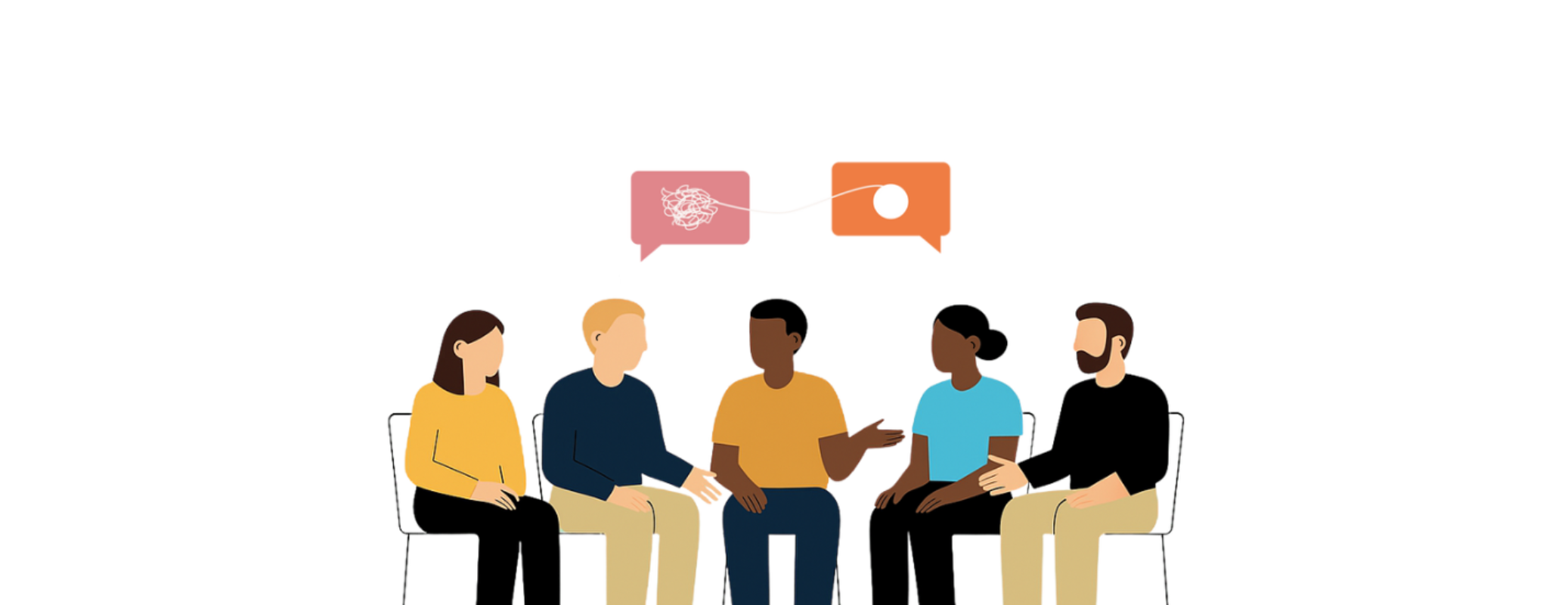
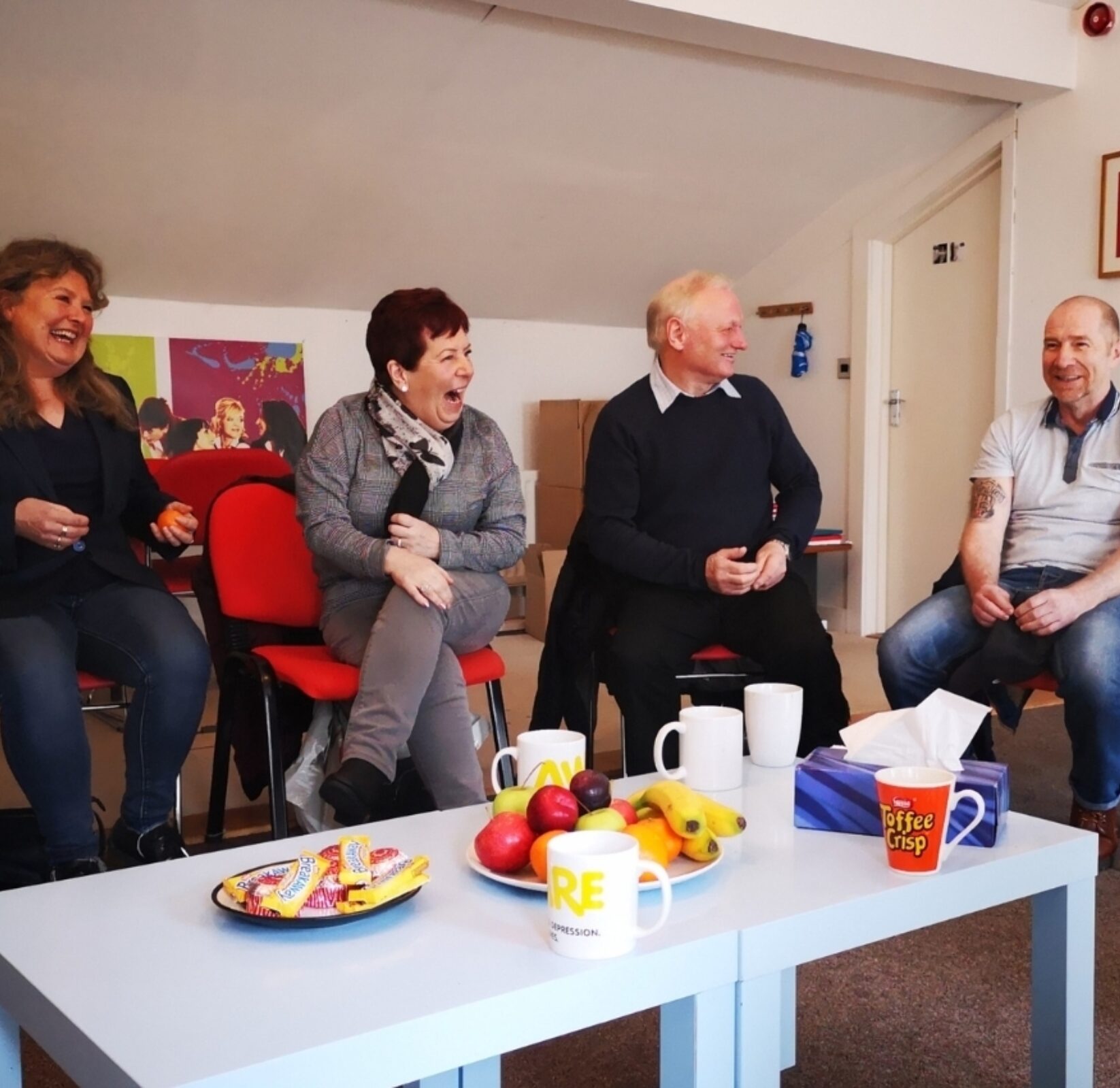
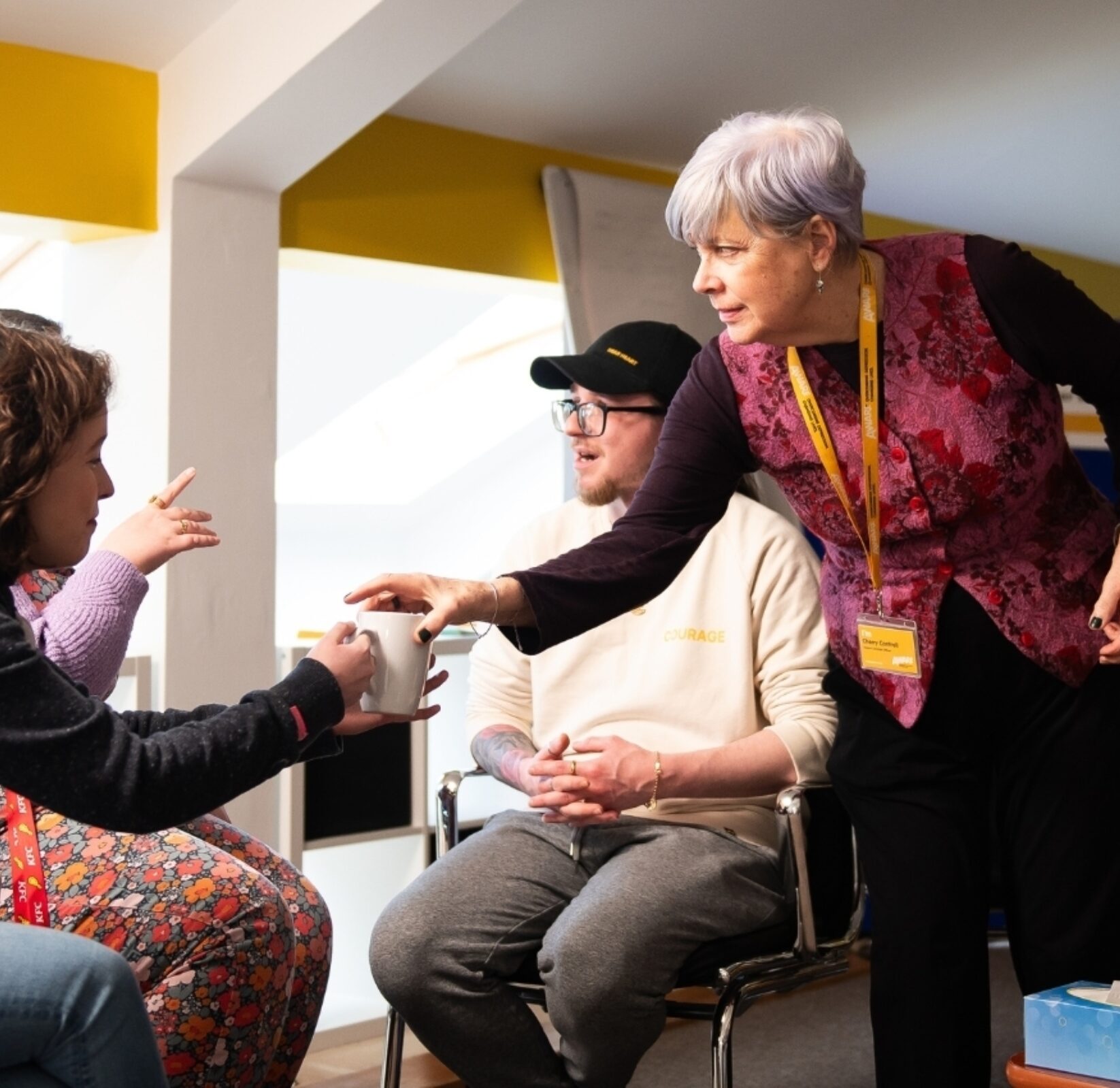
AWARE NI's mental health support groups provide an opportunity to meet others going through similar experiences as you.
This peer-led support can help you understand your illness, allow you to speak freely about your feelings, and make you realise you're not alone. Support group members typically share information, discuss options and support one another in moving forward on the path to recovery.
Our local support groups are led by our fantastic volunteers, who are fully trained in facilitating these meetings. The groups are free to attend, have no waiting list, and are open to anyone 18 and over. There's no need for a GP referral either.
Hear from our support group attendees:
"It was reassuring to know that there are other people who have similar problems to mine and that I'm not the only one who feels this way."
Hear from our support group attendees:
"At my first group meeting, I found out so much about my illness, and the support that I received from other group members was great."
Hear from our support group attendees:
"Depression is a very lonely illness. It's easy to feel alienated. When I sit down at an AWARE NI support group, I look around at smiling faces and people of all ages and realise everybody understands what I'm going through."
Who are the groups for?
Support groups are for anyone affected by low mood, depression, anxiety and bipolar. This includes relatives and carers who are also impacted.
What is the purpose of the group?
The purpose of the group is to bring people experiencing similar issues together so that they can support each other and learn more about the illness and the treatments available. Attending a group also enables people to share experiences and discuss self-help strategies and coping skills that will help in the recovery process.
How many meetings should I attend?
Attendance at a number of consecutive meetings is advised to achieve maximum benefit to help people with their recovery. We recommend attending 3 or 4 meetings initially to find out if the group is right for you.
Who leads our meetings?
A facilitator and a co-facilitator lead our support group meetings. They are volunteers who have either experienced depression themselves or have cared for someone living with mental ill-health. In some cases, our facilitators have attended our support groups as members and have gone on to lead meetings on our behalf. Some facilitators have studied or worked in the field of mental health.
All facilitators are appropriately trained, however they cannot offer advice or opinions about medical matters nor offer counselling. Information factsheets written by professionals are available at each group meeting or by contacting the office
☎ 028 9035 7820 or 028 7126 0602.
Local support groups

Group rules
Due to the nature of the meetings, everything discussed is strictly confidential. You must not talk about it outside the group. In addition, you should not reveal the identity of group members to others.
You are asked to show respect for other group members and facilitators, including accepting other members’ opinions and listening, not interrupting or conducting secondary conversations when others are speaking.
AWARE NI operates a zero-tolerance policy on disruptive, threatening behaviour or offensive language directed at staff, facilitators or other group members. Any member engaging in this type of behaviour or who, in the opinion of the facilitators, is under the influence of alcohol or drugs will be asked to leave immediately. Facilitators may suspend a group if they feel safety is an issue.
AWARE NI discourages one-to-one relationships between group members or group members and facilitators outside of the group setting.
All members are requested to arrive on time and remain for the entire meeting.
If you have any queries about attending a support group, please email info@aware-ni.org